

Peruvian Causa with Fresh Tuna

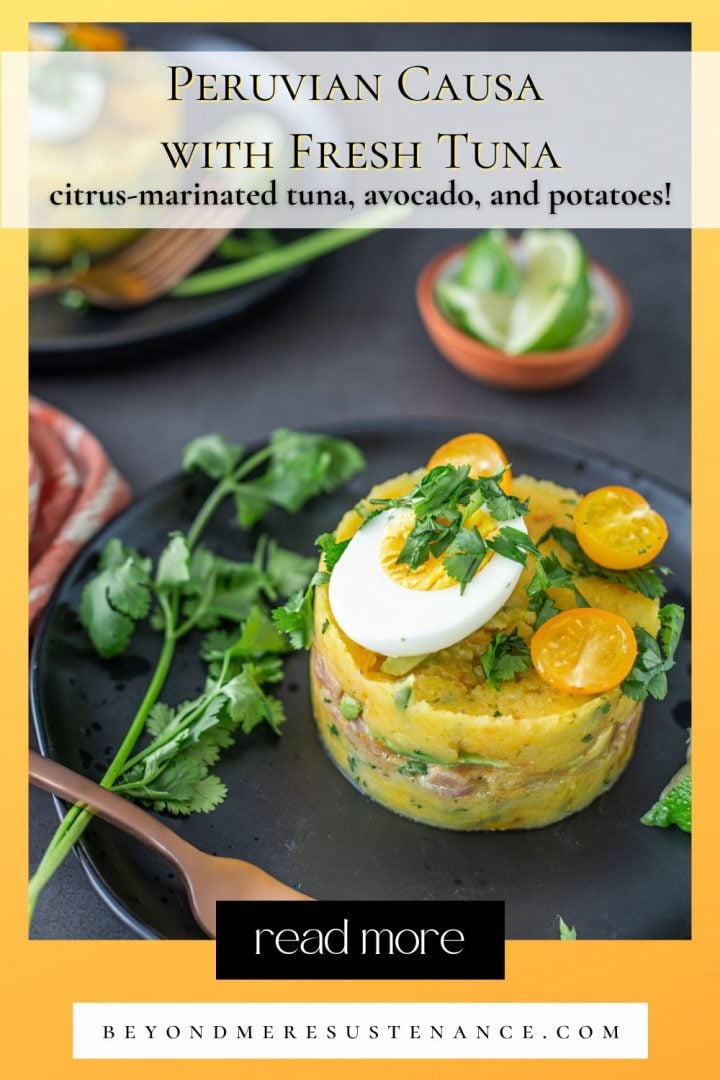
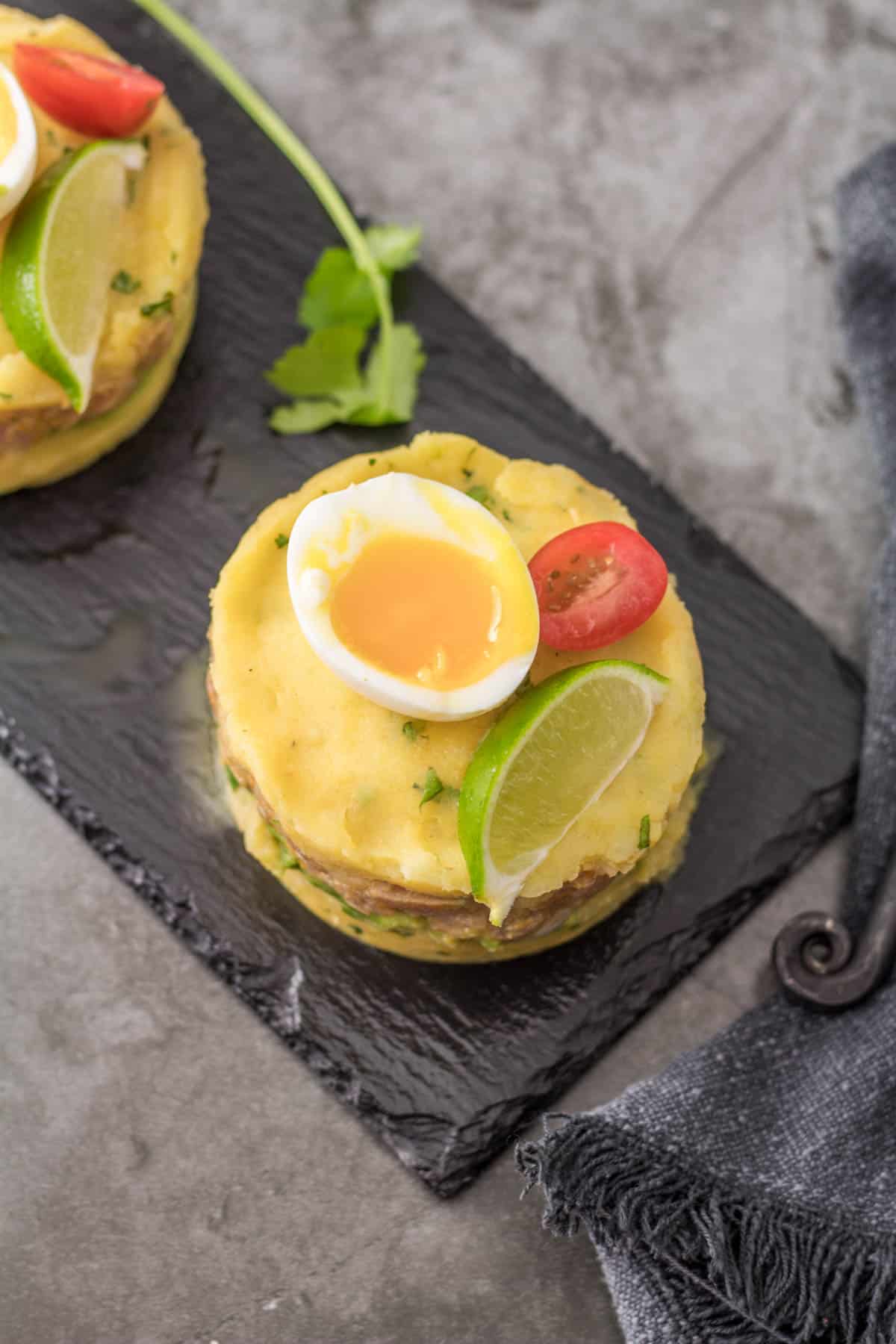
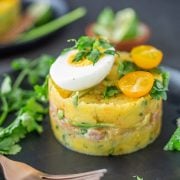
The classic layered Peruvian Causa with a twist – citrusy raw tuna tartare and avocado is layered with lime and ají amarillo infused mashed potatoes. Causa de atún (tuna causa) is elegant in its simplicity, and sure to impress! This causa can be served as a starter or as a main dish, and it’s gluten and dairy free!

👩🏻🍳 Tamara Talks – What is Causa Rellena?
Causa, AKA causa rellena, is a classic Peruvian appetizer found all over Peru. “Causa” is the Spanish word for “cause,” but there are different explanations for its origins. Causa may derive from the Andean indigenous Quechua language word “kausay.” Kausay is their word for “life,” and until the Spanish changed the word to “papa,” it was also used for “potato.”
Having spent a great deal of time in the Andes, and with the indigenous Quechua people, this makes perfect sense. High in the Andes mountains, potatoes were the main sustenance. Even in modern times, in the remote high country, potatoes are “life.” The earliest versions of causa were probably nothing more than an ají amarillo chile pepper between 2 slices of potato. It wasn’t until the Spanish conquered Peru that limes (and other citrus) began to make an appearance in Peruvian food.
Another chapter in the evolution of the causa takes place during the War of the Pacific in the late 19th century. The wives of the soldiers would prepare causa for their husbands, and hand them to them with the patriotic words “para la causa,” which literally translates “for the cause” (of the war). This bit of trivia serves me well; I need to practice my Spanish!
So Many Peruvian Causas!
Causas are made in a variety of ways, and with a variety of ingredients, the constant being the flavorful mashed potato mix. Tuna and chicken “salad” – combined with red onion and a bit of mayonnaise are very common. Ceviche is not as typical, but appears on menus along the coast of Peru with their abundance of fresh fish. The dish lends itself well to a variety of vegetarian fillings like mushrooms, chiles, and squash.
It was Peruvian ceviche and tuna tartare that inspired my tuna causa recipe. I LOVE raw tuna. Its firm, meaty texture is superb in a raw fish dish. The flash frozen ahi tuna I use holds up beautifully in these layered potato stacks.
So, this tuna causa recipe is composed of 3 layers: 1. Mashed potatoes seasoned with ají amarillo paste, lime juice, and fresh cilantro. 2. Thin-sliced avocados. 3. Citrus and ají amarillo infused Latin-style tuna tartare. Fabuloso!
📋 Ingredients Notes
Here is a quick look at the ingredients in the recipe – it’s handy to use at the grocery store or as a summary of what you need. Skip to the recipe for quantities.
- potatoes – My preference is “yukon gold.” They start out yellowish and with the ají amarillo paste, the causa is a pretty yellow color. Some websites recommend a “floury” potato, or a “waxy” potato. I think any potato will ultimately work. The potato mixture needs to resemble a stiff dough.
- ají amarillo paste – Peruvian ají amarillo paste can be found at many supermarkets in the Latin foods section or online.
- fresh lime juice – Please use fresh squeezed lime juice!
- fresh cilantro
- sea salt and fresh ground pepper
- olive oil
- tuna tartare – For the tuna tartare, I use my Latin-Inspired Tuna Tartare recipe. is a fresh twist (chifa-style) on a classic. Ají amarillo chile paste, fresh citrus, ponzu (or soy sauce), and sesame oil provide the Latin-Asian flavors found throughout Peru. To avoid confusion, I link to that recipe, but don’t include it here. Follow the recipe but don’t include the diced avocado with the tuna. Use a slotted spoon to drain excess liquid before layering in the causa.
- avocado
- garnishes – Soft or hard-cooked eggs are typical. Tomatoes, cilantro sprigs, minced fresh chiles or red onion, lime wedges, sliced tomatoes all make nice garnish. Choose your favorites!

prepared yellow potato mixture, and avocado.
🔪 Step-By-Step Instructions
- Bake the potatoes – Pierce unpeeled potatoes 3 or 4 times with a fork. Bake the potatoes at 425℉/218℃ for 25-30 minutes until tender when a fork is inserted. Allow potatoes to cool before removing the skin. While the potatoes bake, mince and marinate the ahi tuna.
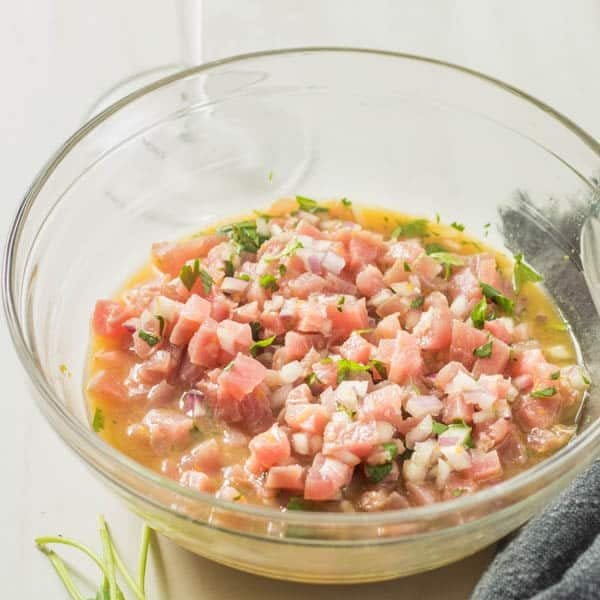
- Prepare the tuna tartare – This is my Latin-style tuna tartare recipe. The tuna requires as little as 15 minutes in the marinade, and can marinate for up to 60 minutes. Use a slotted spoon to layer it after the avocados and first layer of mashed potatoes. NOTE: Including the recipe in this causa post would have made it really long and more complicated than it is in reality. NOTE: Do not add the avocado to the ahi tuna tartare.

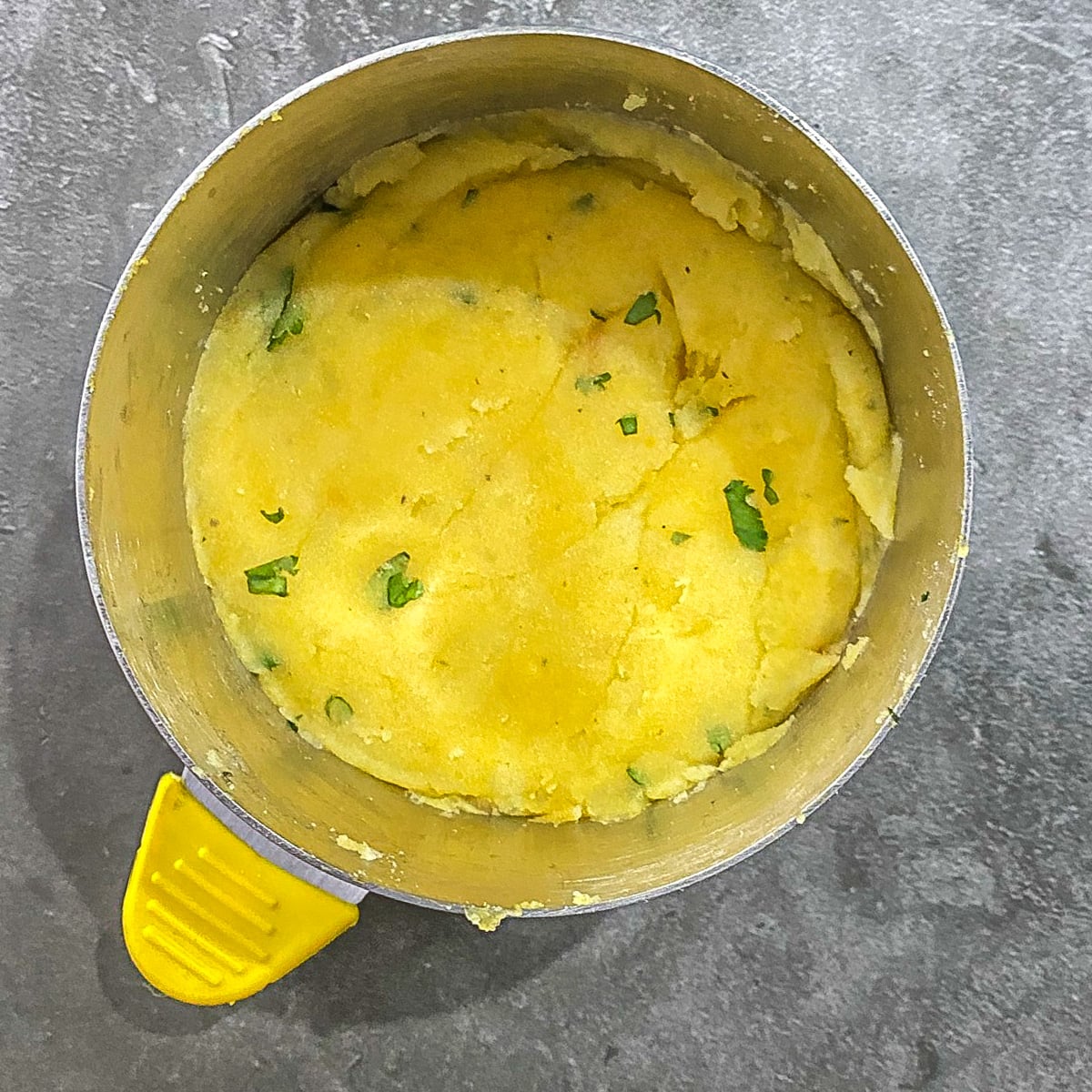
- Layer the mashed potato mixture – To a ring mold, add a layer of mashed potatoes (about 1/4″ to 3/8″). Press down firmly. NOTE: My ring mold comes with a press, and it is helpful. You can probably make do with a silicone spatula.
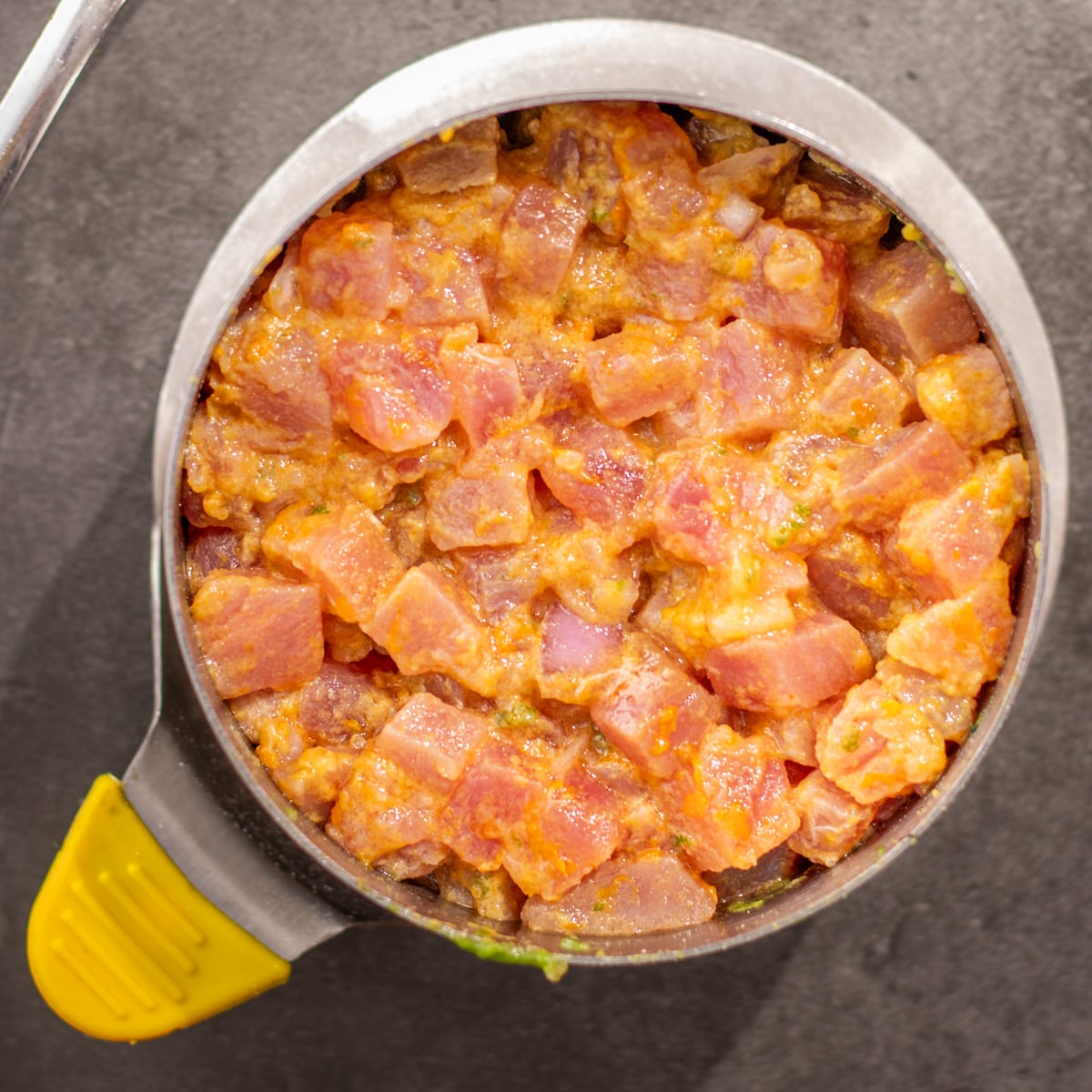
- Add the citrus-marinated minced tuna – Spoon a thin layer of ahi tuna over the potato layer, using a slotted spoon to remove excess marinade. Press firmly.
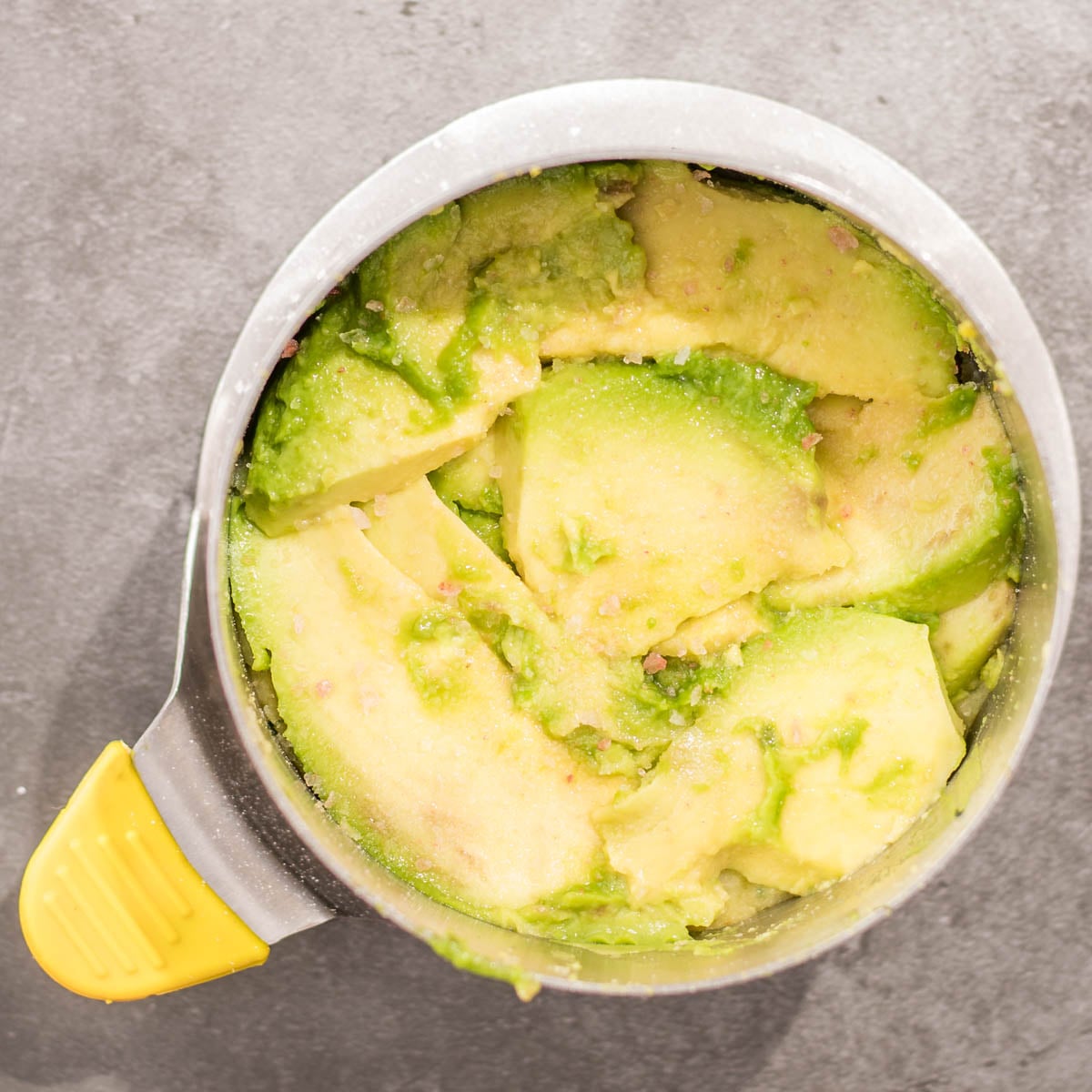
- Add the avocado – Thin-slice the avocado and arrange a thin layer in the mold. NOTE: If your avocado is quite ripe, you may find it easier to mash it.
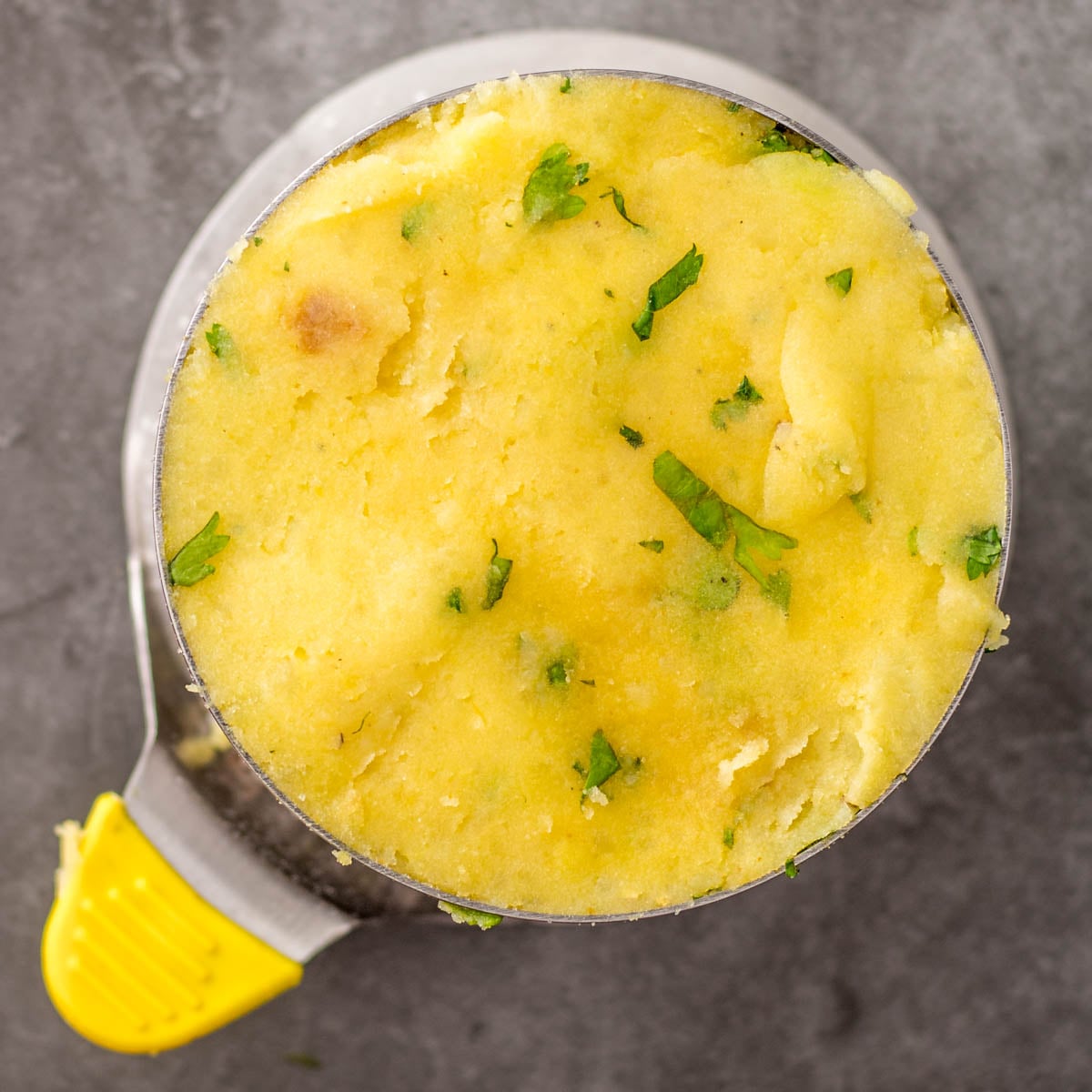
- Finish the causa – Add a final layer of mashed potato mixture, pressing firmly to hold it all together. Plate the causa by removing the bottom plate, and gently pressing from above.

❓FAQ
It varies according to the size of your ring molds. Mine are quite large, and I’m very satisfied with one causa and a side salad. I get 4 large causas. If you use a smaller ring mold, you may wish to serve 1 as a starter course.
I use Yukon gold potatoes. I don’t like a super starchy potato like russet. The best potatoes for causa are yellow potatoes, specifically Peruvian yellow potatoes (called papa amarilla). These potatoes are prized for their creamy texture, buttery flavor, and bright yellow color. If you’re outside Peru and can’t find papa amarilla, good substitutes include:
Yukon Gold, Finnish yellow potatoes, or other waxy yellow-fleshed potatoes. Avoid using russet potatoes or other high-starch types; they can become too dry or crumbly for causa.
Not IMHO. I am not a fan of leftover fish or seafood. However, the leftover mashed potatoes are great in a crispy potato patty. I love them topped with a runny egg, and a couple of slices of avocado.
💭 Tips
This tuna causa recipe is filling! My ring molds are 3.5 inch x 2.1 inch. My husband and I can only eat 1 alongside a salad. The recipe will make about 4 with this size ring mold.
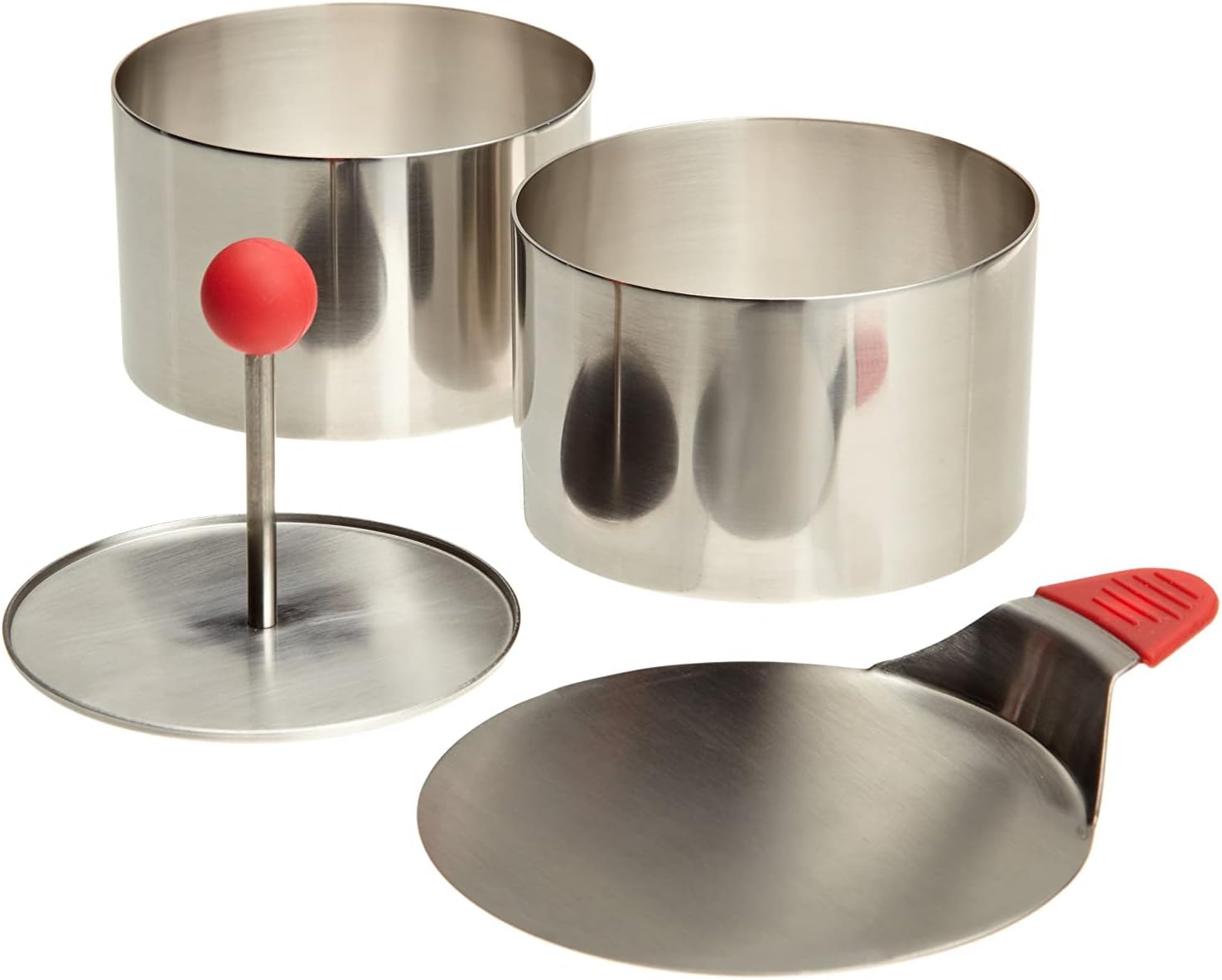
A ring mold is required for this tuna causa recipe. A ricer is a very useful tool for the potatoes, but not necessary.
I have a “power convection” setting on my microwave that runs at 400℉/204℃ and gets the potatoes done in about 30 minutes, and it doesn’t heat up my kitchen!
I buy flash frozen sushi grade ahi tuna. I thaw it in the refrigerator overnight, and mince it in the morning when it’s still slightly frozen. This makes it easier to mince. Make sure you use a very sharp knife.
Note: As an Amazon Associate I earn from qualifying purchases at no additional cost to you. This helps to offset the costs of maintaining my blog and creating awesome content! 😊
🍷 Pairing Suggestions
We enjoy these raw tuna tartare causas with a dry rosé. A crisp, dry wine with a bit of acidity is perfect. A farmhouse saison is a good option for craft beer lovers!
As I mentioned earlier, one causa is enough for me with a salad. What comes to mind immediately? A radish, Lima bean, queso fresco, giant corn, and tomato salad. A more elaborate but equally tasty choice is a Peruvian solterito salad.

Peruvian Causa with Fresh Tuna Recipe

Click to rate!
Equipment
Ingredients
- 2 lbs potatoes - I like yukon gold
- 2 tablespoons ají amarillo paste
- 2 tablespoons fresh lime juice - about 2 limes
- fresh cilantro - chopped
- sea salt and fresh ground pepper
- 2 to 3 tablespoons olive oil
- tuna tartare
- 2 small or 1 large avocados
- garnishes – Soft or hard-cooked eggs are typical. - cilantro sprigs, minced fresh chiles or red onion, lime wedges, sliced tomatoes all make nice garnish. Choose your favorites!
Instructions
- Bake the potatoes at 425°/218℃ for 25-30 minutes until tender when a fork is inserted. Allow potatoes to cool before removing the skins. Rice or mash the potatoes. Add to a large prep bowl.
- Add the ají amarillo paste, lime juice, cilantro, and salt/pepper. Add olive oil a little at a time to achieve a stiff but pliable dough. Check for seasoning.
- Prepare the tuna tartare. Use a slotted spoon to layer it after the first mashed potato layer.
- To a ring mold, add a thin layer of mashed potatoes (see finished causa photos). Using a slotted spoon, add a thin layer of tuna tartare. Next, add a thin layer of avocado (either thin-sliced or mashed). Finally, top with a layer of mashed potatoes. Press gently, and un-mold. Repeat with remaining ingredients.
- Serve immediately or refrigerate. Garnish as desired.
Notes
Nutrition
NOTE: Macronutrients are an approximation only using unbranded ingredients and MyFitnessPal.com. Please do your own research with the products you’re using if you have a serious health issue or are following a specific diet.


This recipe really embodies the flavors of Peru. I agree about using Yukon Gold for this; Russet or White Rose just wouldn’t work. Just this plus a small salad is plenty for a light dinner.